

Hermaphroditism, Medical Science and Sexual Identity in Spain, 1850–1960
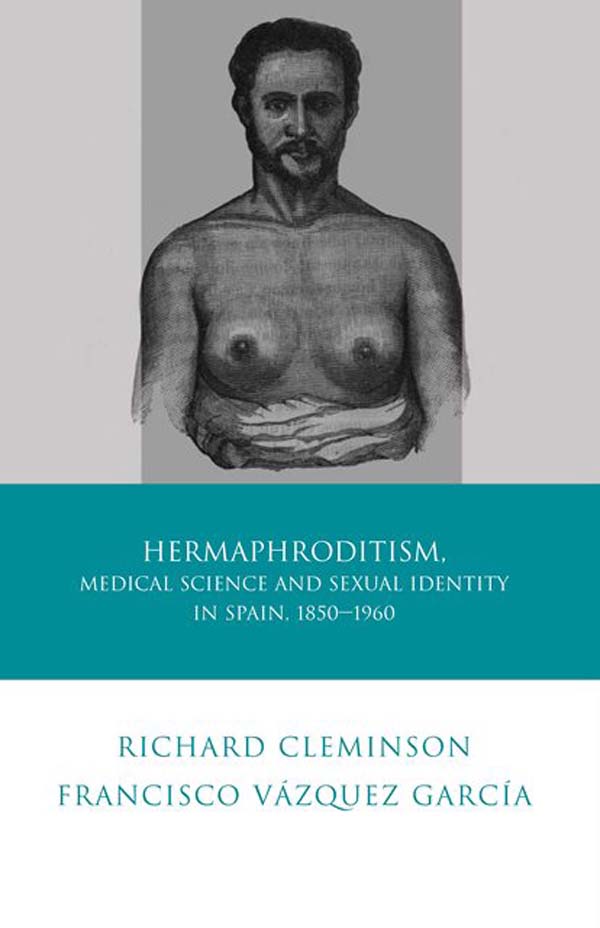
Awdur(on) Richard Cleminson,Francisco Vázquez García
Iaith: Saesneg
Cyfres: Iberian and Latin American Studies
- Hydref 2009 · 288 tudalen ·216x138mm
- · Clawr Caled - 9780708322048
- · eLyfr - pdf - 9780708322796
- · eLyfr - epub - 9781783163793
This is the first book in English to analyse the medical category of 'hermaphroditism' in Spain over the period 1850-1960. It attempts to show how the relationship between the male and female body, biological 'sex', gender and sexuality constantly changed in the light of emerging medical, legal and social influences. Tracing the evolution of the hermaphrodite from its association with the 'marvellous' to the association with intersexuality and transexuality, this book emphasizes how the frameworks employed by scientists and doctors reflected not only changing international paradigms with respect to 'hermaphrodite science' but also social anxieties about shifting gender roles, the evolving discourse on sexuality and, in particular, the increased visibility of the 'sexual deviancies' such as homosexuality and changing legislation on marriage and divorce. Finally, we hope to open a space whereby the voice of 'hermaphrodites' and 'intersexuals' themselves could be heard in the past as agents in the construction of their own destiny as figures deemed 'in-between' by medicine and society.
'This is a fascinating exploration of the changing shapes of hermaphroditism and intersexuality in Spain's journey through modernity, accessible to readers a cross a wide range of interests and disciplines. Lucidly and knowledgeably written, the book takes the reader through a story of shifting categories, intense personal struggles, the complex and endlessly revealing processes of 'sex determination' by specialists and the construction of discourses, social and professional. Alive to the linkages between science, medicine, society, and culture, it gradually reveals a distinctive dialogue between Spanish and international scientific ideas about sex, gender, and the body. Patients, experts, and institutions alike are given a voice: some of the famous--such as Gregorio Maranon--are listened to with renewed interest and wariness of currently accepted views on them: others are heard and their experiences assessed for the first time here.', hris Perriam, Manchester University