
Introducing the Medieval Snail
Author(s) Julia Pineau
Language: English
Genre(s): Medieval
Series: Medieval Animals
- June 2026 · 144 pages ·198x129mm
- · Paperback - 9781837723720
- · eBook - pdf - 9781837723737
- · eBook - epub - 9781837723744
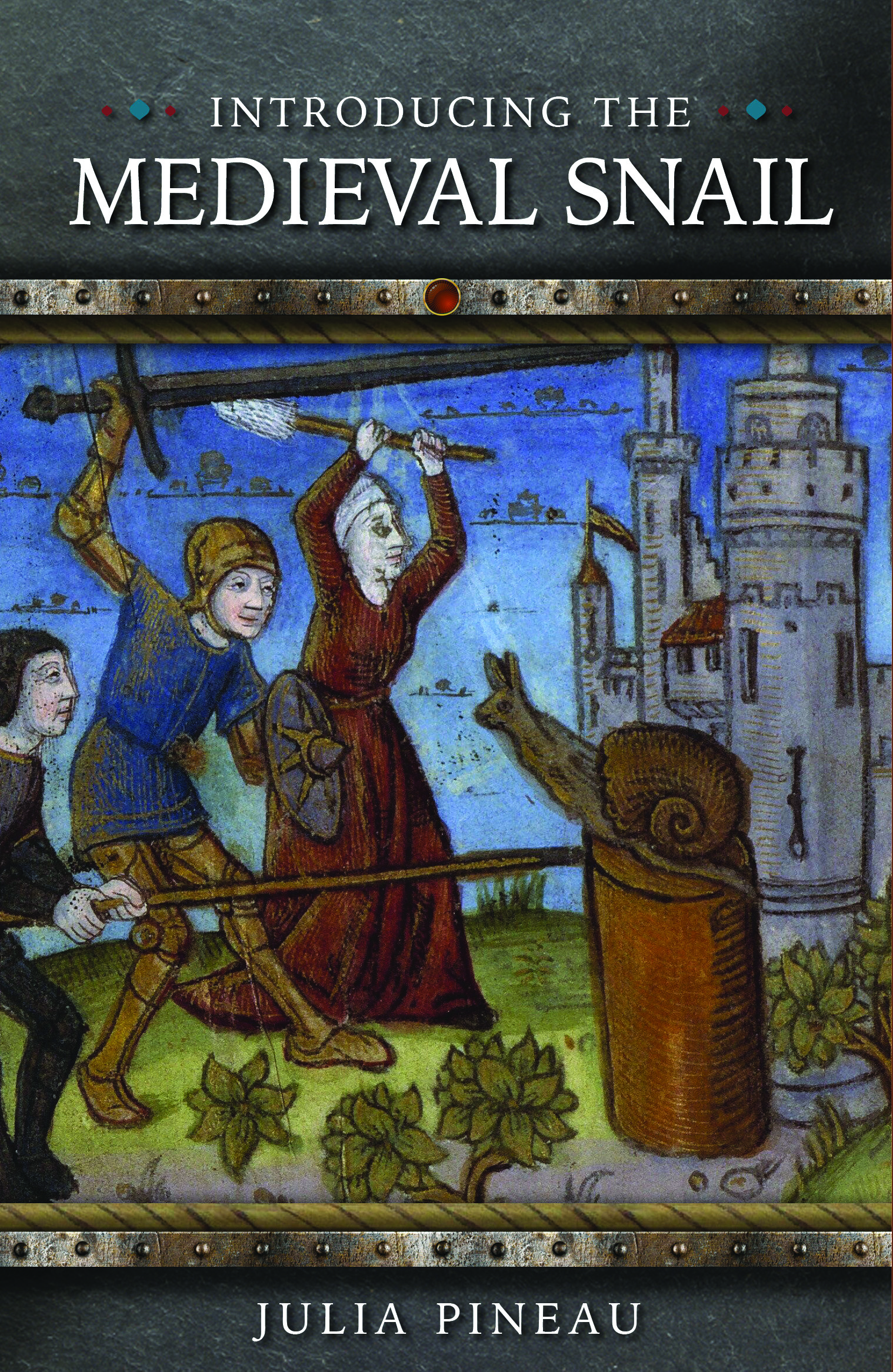
When one thinks about medieval animals, snails rarely come to mind. Just as history has long had its biases, so has the study of animals – both have long focused on the ‘crowned heads’. A focus on the seemingly insignificant, on the small and the frail, offers a fresh point of view. This book studies the uses and representations of medieval snails, spanning material culture, medicine and gastronomy as well as a great variety of texts and images – taking into consideration bestiaries, sermons, poems and insults, as well as marginalia, sculpture, paintings and painted ceilings. Observing the Middle Ages from the viewpoint of a snail can be surprising, and lead us to delve into material everyday life as well as the core of culture-building. This study concludes with a novel reading of the famed ‘snail-combat motif’, in which a knight cowers faced with a ferocious mollusc, making a connection between Gothic marginalia and a new, most malleable cultural expression: the meme.
'Who would have thought the medieval snail could carry so much meaning? Pineau’s inventive and insightful study reveals it as a figure of humour, ambiguity and subversion, opening up new perspectives on marginal imagery and its unexpected afterlives, while capturing the playful and intellectually rich complexity of medieval visual thought.', Dr Monica A. Walker Vadillo is a public art historian and museum professional, and a contributing writer to National Geographic Historia
Preface
List of illustrations
Introduction
1 – What is a snail? A slippery scope
2 – Concrete uses: waste not, want not – from frugality to luxury
3 – Snails in texts: meanings most malleable
4 – Snails in visual art: devil in the detail
5 – Molluscs in Marginalia: the snail-combat motif
6 – Success and posterity: introducing the “Memedieval”
Conclusion
Bibliography
Endnotes