

Fascist Female Gothic
National Catholicism and the Politics of Fear in Spanish Fascist Women’s Writing, 1937–1945
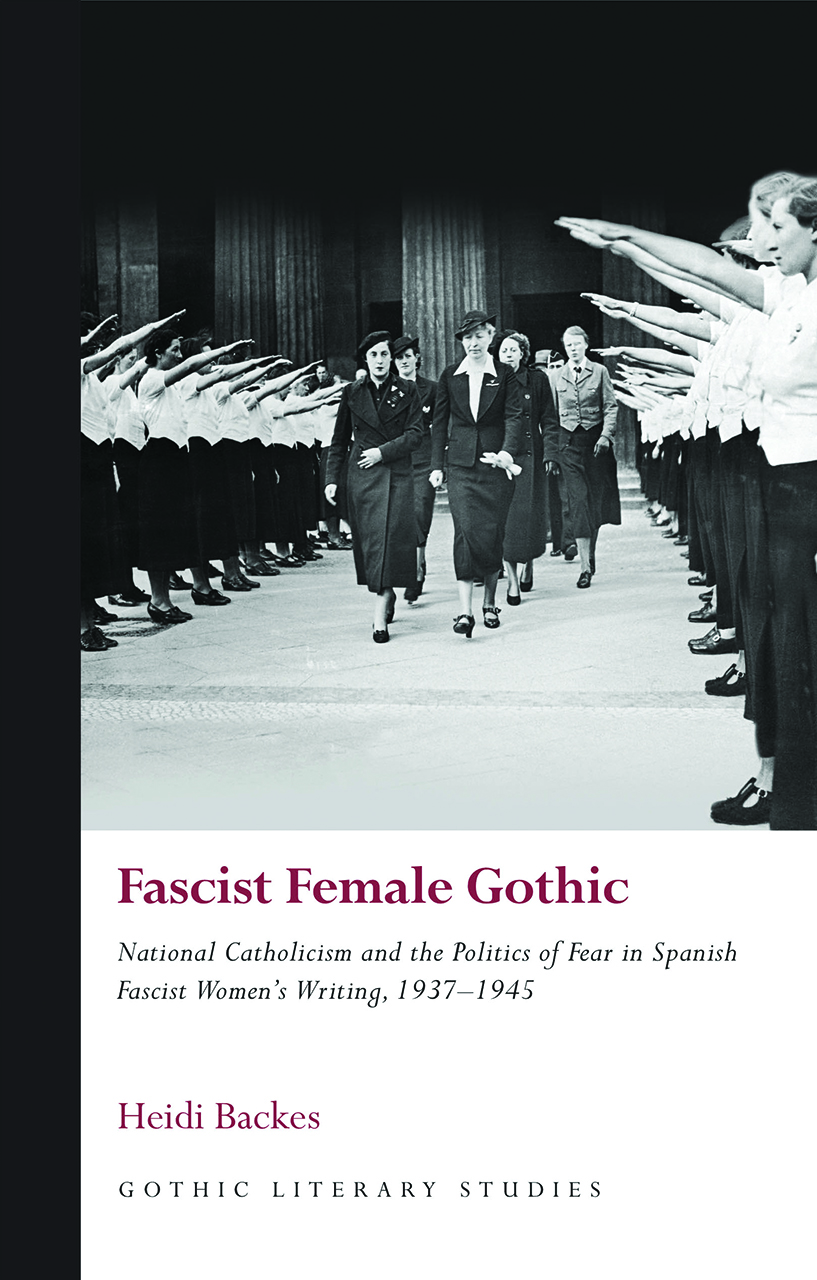
Author(s) Heidi Backes
Language: English
Genre(s): Literary Studies
Series: Gothic Literary Studies
- January 2027 · 272 pages ·216x138mm
- · Hardback - 9781837724611
- · eBook - pdf - 9781837724628
- · eBook - epub - 9781837724635
This volume examines the psychology of fascism and its intrinsic relationship with the Gothic through the close study of propagandistic narratives by Spanish fascist women during the 1930s and 1940s. With close readings of women’s magazines, novels and prison diaries, Gothic fear and monstrosity are for the first time showcased as fundamental tropes within the fascist political strategy of Francisco Franco’s dictatorship. As both objects and agents of the fascist regime, the women in charge of the Spanish Women’s Section collaborated with the Catholic Church on a series of magazine columns and educational campaigns, evoking a nightmare landscape rooted in the perceived evils of twentieth-century feminism, and using Gothic motifs to persuade other women to join the fascist cause. By its study of these motifs, Fascist Female Gothic demonstrates the political power of the Gothic, and sounds warning against a return to the rhetoric of fear in the turbulent sociopolitical present.
Series Editors’ Foreword
Acknowledgements
Introduction: Fascist Female Gothic
Part One: Fascist Women’s Magazines
Introduction
1 True Catholic Womanhood and the Monstrous Female
2 Domestic Terror: Motherhood, Marriage and the Horrors of the Everyday
3 Body Horror: Paper Dolls, Inner Monsters and the Uncanny Catholic Woman
4 The Drumbeat of Fear: Gothic Short Narratives in Spanish Women’s Magazines
Part Two: Fascist Women’s Novels and War Diaries
Introduction
5 Satan’s Fury: Gothic Excess as Propaganda in Concha Espina’s Rearguard
6 Monsters, Mayhem and Madness: Testimony and the Cult of Suffering in Fascist Women’s War Diaries
7 Gothic Espionage: Secrets, Lies and Insanity in Herta Björnsen de Wedel’s Ventas Jail
8 Sealed in Blood: Antisemitism and Racial Stereotyping in Dora Sedano’s Blood Merchants
Afterword